Capital is crucial for the growth and expansion of businesses in India’s MSME sector. Credit scores are increasingly vital for accessing this capital, serving as a measure of a business’s trustworthiness and repayment likelihood. Niyara Capital Solutions aims to provide innovative credit and capital solutions to underserved MSMEs, particularly micro-enterprises in Bharat.
A credit score is a three-digit number (typically 300-900) summarizing an individual’s or business’s financial reliability, credit history, and payment behavior.
Key Credit Scores for Indian Small Business Owners
Personal Credit Score (CIBIL Score):
- Reflects an individual’s management of loans and credit cards.
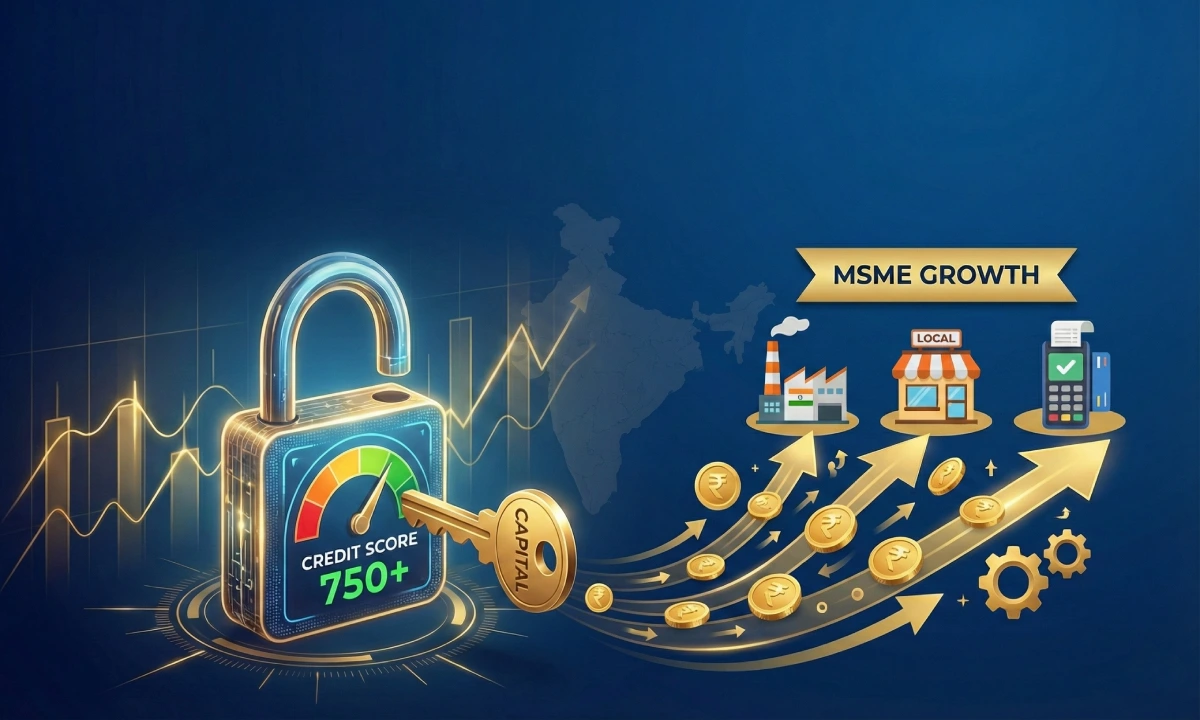
- A score of 750 or higher is considered excellent, improving loan approval chances and relatively better interest rates.
- Influencing factors: timely payments, low credit utilization, credit history length, credit mix, and frequency of new credit applications.
- Linked to PAN and Aadhaar in India.
Business Credit Score (CIBIL MSME Rank / Company Credit Report):
- Indicates a company’s financial health.
- For businesses with exposures up to Rs. 50 crores, the CIBIL MSME Rank (CMR) is used (1-10, with 1 being best).
- Factors considered: business loan payment history, financial performance, liquidity, business age (vintage), public records (legal disputes), and GSTIN/CIN.
- For smaller/newer businesses, the founder’s personal credit score significantly impacts business loan approvals.
Evolution of Credit Assessment in India:
Pre-2000s (The Old Ways):
- Lending was localized, relationship-driven, based on personal assessment and collateral.
- Prone to biases and inconsistencies, limiting opportunities.
Early 2000s Onwards (Dawn of Formal Scores):
- CIBIL’s establishment in 2000 introduced standardized, objective credit assessment.
- Other bureaus like Experian, Equifax, and CRIF High Mark expanded the landscape.
- Shift towards data-driven decisions, though traditional financial records remained important.
Current Landscape: Lenders, Businesses, and Reality
Lender Perspective:
- Credit scores are heavily relied upon for loan evaluations.
- A strong score (ideally 725+, with 750+ being gold standard) enhances approval chances, interest rates, and loan amounts.
- Other factors considered: business type, age (typically 2-3 years), turnover, profitability, existing debts, and registration details.
- A good score signals lower risk, leading to faster processing and better terms.
Business Owner Perspective:
- Many small business owners are unclear about credit scores and their impact.
- Misconceptions exist, such as the belief that checking one’s score negatively affects it.
- MSMEs, especially new ventures, struggle to build credit history due to documentation issues and traditional bank skepticism.
- Lower scores can result in rejections, higher interest rates, or collateral demands.
- Despite challenges, the MSME sector shows resilience and growth.
Controversies and Roadblocks in Credit Scoring
- Outdated Traditional Models: Static, backward-looking models may not capture real-time MSME dynamics or seasonal business flows.
- Data Dilemmas: Many MSMEs lack formal credit histories or digital footprints, creating data gaps. A “one-size-fits-all” approach may not suit diverse industries (e.g., agriculture’s seasonality).
- Collateral Conundrum: Persistent demand for physical collateral remains a barrier for startups and asset-light businesses.
- Financial Literacy Gap: Lack of awareness about credit scores and management leads to poor financial decisions and lower scores.
- Delay in upload by lenders: There are gaps and delays in uploading of the repayment history of borrowers to the bureaus by lenders. This may lead to gaps in credit scores or lags which only get clear over period of time.
Practical Steps for MSMEs to Build Credit Superpower
Timely Repayments: Pay debts on time, consistently.
Smart Credit Use: Keep credit utilization below 30% of the available limit.
Monitor and Correct: Regularly check credit reports for errors.
Separate Finances: Maintain distinct business and personal accounts.
Build History: Start with smaller credit products (e.g., business credit card) and manage them responsibly.
Judicious Applications: Avoid numerous loan inquiries in a short period.
Conclusion
Credit scores are crucial for India’s small business loan ecosystem. Despite ongoing challenges, digital and data-driven solutions are improving capital access. A well-managed credit score is a testament to a business’s financial health and a passport to future opportunities, enabling sustained growth and prosperity.